As rehearsals continue for Macbeth, we have been speaking with Director Heidi Vaughan about her take on why this play feels urgent now, how ensemble sits at the heart of the work, and what audiences can expect from this bold new in-house production
What drew you to directing Macbeth at this moment?
Macbeth is a play that never really loosens its grip, but right now it feels especially close to the surface. It is short, fast, and utterly relentless. There is very little room to breathe in it, and that pressure feels very familiar to the world we are living in. What interests me most is that this is a story about choice. Prophecy may open the door, but Macbeth steps through it himself. Again and again. The play asks what happens when ambition overtakes care, when individual desire overrides responsibility to others. Once that line is crossed, there is no way back. It felt like the right time to sit with those questions.
You are known for an ensemble-led approach to directing. How does that shape this production?
For me, Macbeth is not a play about one man in isolation. It is about a system. A network of people, pressures, silences, and complicities that allow violence to escalate. Working with an ensemble allows us to hold that complexity. It means the story is not carried by a single performance, but by a group of people with a shared language, rhythm, and responsibility. Everyone on stage is implicated in the world we are building.
That approach also creates trust. This is a dangerous play emotionally, and the only way to do it properly is together, with care, openness, and a sense that we are all holding the work.
How has the Tobacco Factory space influenced your vision for the production?
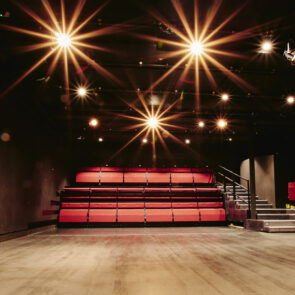
The Factory is incredibly honest. The audience is close, the space is exposed, and there is nowhere to hide. That immediacy suits Macbeth perfectly. In this space, the play becomes a kind of pressure cooker. Violence is not abstract. It is witnessed. Guilt does not dissipate. It lingers. The audience are not watching from a safe distance. They are in the room with it. That intimacy also supports clarity. We are not interested in spectacle for its own sake. The power comes from proximity, rhythm, and the sense that this is happening now, in front of you.
How have you approached character, particularly Macbeth himself?
What is essential to me is humanity. If Macbeth is simply a monster, the play collapses. The tragedy lies in the fact that we can recognise ourselves in him. His desire to be seen, to matter, to have some control in a chaotic world. Stu brings enormous generosity and vulnerability to the role. There is humour, warmth, and doubt there, which makes the descent all the more devastating. This is not about excusing his actions, but about understanding how someone gets there. That is where the play does its most uncomfortable work.
How do the design, sound, and movement come together in this production?
Very early on, we talked about creating a shared language across disciplines. Design, sound, and movement are not decorative. They are narrative tools.
The landscape Edwina has created feels enduring and indifferent, in contrast to the fragility of the people within it. The sound world Ian and Alex are building is visceral and unsettling, driven by rhythm and disruption rather than atmosphere alone. Dan’s movement work explores what violence does to the body, before and after it is enacted. Together, they are shaping a world that feels uncanny, pressured, and alive. One that supports the story rather than explaining it.
Macbeth can feel intimidating for audiences. What would you say to someone who is unsure about coming?
You don’t’ need to prepare. You don’t need to know Shakespeare. This play is fast, physical, and emotionally direct. You do not have time to get lost. It carries you with it. And while it goes to dark places, it remains alive, charged, and urgent. We are making this for people in the room, not for an idea of what Shakespeare should be.
Macbeth is showing at Tobacco Factory Theatres from 19th Feb – 28th March 2026.
Venue: Factory Theatre, Tobacco Factory Theatres
Tickets: From £15
Box Office: 0117 902 0344
Age recommendation: 12+
For full details on BSL-interpreted, captioned and relaxed performances, visit the Macbeth page on our website.
This production of Macbeth is proudly supported by Clifton College.

Posted on 04 February 2026